
Many visitors come to Ranthambore mainly to see tigers. But the area is also home to one of Rajasthan’s most important medieval forts. Knowing its history makes the visit much more meaningful. Ranthambore Fort was a powerful Rajput stronghold, the site of major medieval battles, and today a UNESCO World Heritage Site. Its walls and ruins stand above the same forest where wild tigers still roam.
That combination is what makes Ranthambore so special: you are experiencing both medieval history and living wildlife in the same landscape.
Why Ranthambore Fort Matters
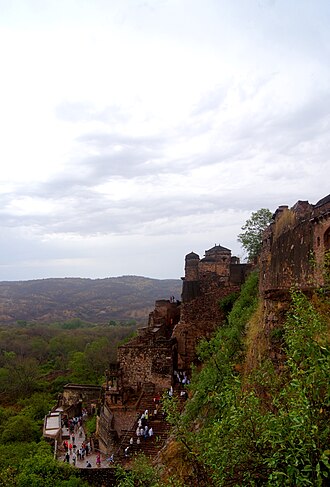
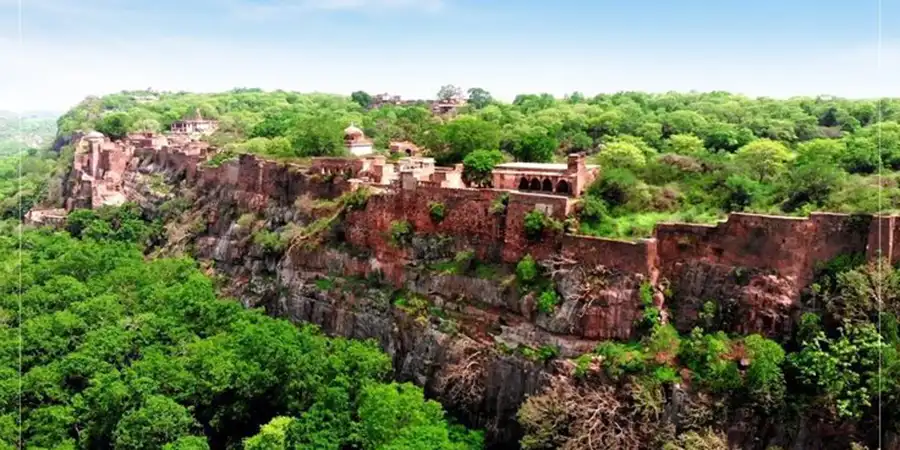
Ranthambore Fort is important because it was a powerful Chauhan stronghold and played a major role in the history of medieval Rajasthan. Its origins go back to around the 10th century, although the exact early history is debated. Its greatest strength was its location. Built on a high rocky hill and surrounded by forest, the fort was naturally difficult to attack. UNESCO calls it a “forest hill fort” because its defence was closely connected to the surrounding landscape.
The fort became especially famous during the rule of Hammir Dev Chauhan, who fought against Alauddin Khalji. The fort was eventually captured in 1301 after a major siege. Today, Ranthambore is also famous for its temples, ruins, lakes, and connection with Ranthambore National Park. In 2013, it became part of the UNESCO World Heritage Hill Forts of Rajasthan, along with Chittorgarh, Kumbhalgarh, Gagron, Amber, and Jaisalmer.
In short: Ranthambore matters because it combines Rajput history, military architecture, religion, and the natural landscape of the forest in one place.
The siege that defined the fort’s history
If you remember one name from Ranthambore’s past, make it Rao Hammir Dev Chauhan, the ruler most associated with the fort’s golden age and its most dramatic defeat.
In 1301, Alauddin Khalji’s forces from the Delhi Sultanate laid siege to Ranthambore. The fort’s natural and built defences made the campaign genuinely difficult, but Hammir Dev was eventually defeated and the fort fell. The episode became one of the defining stories of medieval Rajput resistance, and later tradition connects the following years to a jauhar during a related 1303 siege, though the details blur between historical record and legend. After Hammir’s defeat, control of the fort passed through several hands over the centuries, including powers linked to the Delhi Sultanate, Mewar, the Mughals, and eventually Jaipur state.
What You’ll Actually See Inside Ranthambore Fort
Ranthambore is not a polished palace like Amber Fort. Instead, it feels like an ancient fortified city in ruins, where the buildings, walls, temples, and water systems tell the story of how people once lived and defended themselves.
- Massive Fort Walls: The walls follow the natural shape of the hill. Their height and position made it difficult for enemies to climb up and attack the fort.
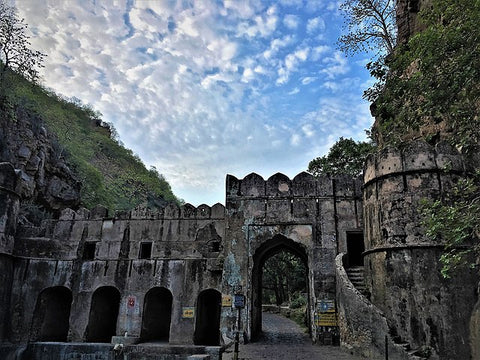
- Historic Gateways: Gates such as Ganesh Pol were built for defence, not just decoration. Attackers had to pass through narrow and carefully protected entrances.
- Hammir’s Palace: These are the remains of the palace associated with Hammir Dev Chauhan, one of Ranthambore’s most famous rulers. UNESCO considers them among the oldest surviving palace remains in the Hill Forts of Rajasthan.
- Battis Khamba Chhatri: A distinctive stone structure supported by many pillars, showing the architectural style of the period.
- Temples: The fort contains both Hindu and Jain temples. The most famous is the Trinetra Ganesh Temple, which is still an active place of worship.
- Water Tanks: These were extremely important. During a siege, the fort could not depend on supplies from outside, so water was collected and stored inside. This helped the people and soldiers survive for long periods.
The key thing to understand is that everything inside had a purpose—defence, worship, living, or survival. That is what makes Ranthambore feel like a real medieval fortress rather than simply a collection of ruins.
The three lakes that shape the landscape
Ranthambore’s fame isn’t just about stone. Three lakes inside the national park give the fort its dramatic setting, and UNESCO notes that all three are visible from the fort itself.
- Padam Talao — the largest and best known, with the historic Jogi Mahal standing beside it. This is also where you’re most likely to see basking crocodiles.
- Raj Bagh Talao — arguably the most photogenic spot in the park, ringed by old ruins, arches, and stone structures that sit between it and Padam Talao.
- Malik Talao — smaller, but known for marsh crocodiles and a steady presence of waterbirds.
During the dry season, these lakes become the busiest wildlife hubs in the park, since every animal, deer, boar, birds, and eventually predators, has to come to water.
Crocodiles vs. Gharials: A Common Mix-Up
People often confuse gharials with the crocodiles found in Ranthambore, but they are different animals. The lakes inside Ranthambore National Park, such as Padam Talao and Malik Talao, are home mainly to marsh crocodiles (mugger crocodiles). These crocodiles have a broad, powerful snout and can be seen resting near the water. Gharials are different. They have a very long, thin snout that is specially adapted for catching fish. They are mainly associated with the Chambal River, where they are protected in the National Chambal Gharial Sanctuary, a separate wildlife area.
So, the easiest way to remember it is:
Ranthambore → 🐊 Marsh crocodiles
Chambal River → 🐊 Gharials
The two places are relatively close, but they offer different wildlife experiences. If your main goal is to see gharials, you would look at the Chambal River, not a Ranthambore safari.
How the fort connects to the tiger reserve
Ranthambore was once part of the hunting grounds of the Maharajas of Jaipur before becoming a conservation landscape under India’s Project Tiger programme. Today it’s one of the world’s best-known places to see wild Bengal tigers, and the fort sits directly inside that same forest.
That’s what makes standing at the fort’s edge unusual. You’re not looking out at a modern city around an old monument. You’re looking over the same forest, lakes, and ruins where tigers, leopards, sloth bears, and hundreds of bird species actually live.
Quick guide: what to focus on during your visit
| Look for | Why it matters |
|---|---|
| The hill and forest around you | Explains why the fort was built here at all |
| The gateways | Shows how the fort was designed to slow attackers |
| The water tanks | Reveals how the fort survived long sieges |
| Hammir’s Palace remains | Connects you to the fort’s most important era |
| Trinetra Ganesh Temple | Shows the fort is still a living religious site |
| The lakes and forest views | Explains why Ranthambore became so visually famous |
If you’re planning the wildlife side of your trip, our Ranthambore safari guide covers gypsy vs canter and booking, and our gharial safari from Ranthambore guide covers the Chambal River side trip. Coming from Jaipur, check our Jaipur to Ranthambore day trip guide for routes and timing. Or browse our Rajasthan tour packages if you’d rather have the fort, safaris, and stays planned for you.

Rajasthan Family Package For 6 Nights
Embark on an unforgettable 7-day Rajasthan tour package that takes you through the royal cities of Jaipur, Jaisalmer, and Udaipur.…
6 Nights
Rajasthan Package For 5 Nights With Jaipur Jodhpur & Udaipur
Embark on a captivating 6-day Rajasthan tour package and explore the vibrant colors of this majestic land. From the pink…
5 Nights
Jaisalmer Couple Package With Camp Stay & Camel Safari
Experience the magic of Jaisalmer with this delightful 3-day, 2-night tour package. Discover the golden sands of the Thar Desert,…
2 Nights
Rajasthan Safari Tour Package for Ranthambore and Jaipur
Embark on an exciting 4-day tour package to Rajasthan! This Jaipur Ranthambore holiday takes you to the enchanting city of…
3 Nights
Rajasthan 4 Nights Plan with Jaipur & Udaipur
Experience the charm of Rajasthan with this exciting 5-day tour package. Enjoy the majestic beauty of Jaipur and the romantic…
4 Nights
Rajasthan Tours for 8 Nights Jp2RnUd2Js2Jd
Join this exciting Rajasthan tour package for an unforgettable 9-day vacation! Explore the golden sands of Jaisalmer, the blue streets…
8 Nights
7 Nights Rajasthan Package With Jaipur Jodhpur Udaipur Jaisalmer
Embark on an unforgettable 8-day Rajasthan tour package and immerse yourself in the royal culture of Jaipur, Udaipur, Jaisalmer, and…
7 Nights
Rajasthan Tour Package - J2BJs2JdUd2PJ
Embark on an unforgettable 11-day Rajasthan tour package that takes you through the magnificent landscapes and rich culture of Rajasthan.…
10 Nights
Rajasthan Tour Package 9 Nights - J2RUd2Js2JdJp
Embark on a breathtaking 10-day Rajasthan tour package that takes you through the heart of Royal India. Discover the golden…
9 Nights
Golden Triangle - 5N - D2AJ2
Join us on an exciting 6-day tour package through the magical Golden Triangle. Discover the vibrant streets of Delhi, marvel…
5 Nights
Golden Triangle 6N - J2AD3
Embark on an unforgettable Golden Triangle tour package that takes you through the vibrant cities of Delhi, Jaipur, and Agra…
6 NightsGolden Triangle Tour Package With Delhi Agra Only
Join this amazing Golden Triangle Tour Package for 3 days and 2 nights of unforgettable experiences in Delhi and Agra!…
2 NightsDiscover Incredible Destinations
Handpicked locations offering unforgettable experiences for every type of traveler
Andaman
Paradise of pristine beaches

Rajasthan
Land of kings and culture

Kashmir
Heaven on Earth

Ladakh
Land of high passes

Kerala
God's own country

Meghalaya
Abode of the clouds

Dubai
City of gold and luxury
Thailand
Land of smiles

Maldives
Tropical paradise islands

Singapore
Garden city of Asia

Bali
Island of the gods

Vietnam
Ancient charm meets modern