Bikaner sits quietly on the edge of the Thar Desert, and it rewards travellers who give it real time instead of a quick stopover between Jodhpur and Jaisalmer. The best places to visit in Bikaner mix a fort that was never conquered, red-sandstone royal palaces, and one of India’s strangest temples. This guide covers the sights worth your time, how long each one takes, and how to plan one or two days around them.
Why Bikaner Belongs on Your Rajasthan Route
Bikaner deserves a place on your Rajasthan itinerary because it offers a different side of the state—one shaped by the desert, ancient trade routes, and a slower pace of life. Founded in 1488 by Rao Bika, a Rathore prince, Bikaner grew from a desert settlement into a powerful kingdom. Its location in the northern Thar Desert placed it along important caravan routes that connected Central Asia with the Gujarat coast. For centuries, merchants, traders, and caravans passed through the region, bringing wealth, culture, and new influences to the city.
What makes Bikaner especially appealing today is that it feels less polished and tourist-heavy than destinations such as Jaipur or Udaipur. The city has retained much of its everyday character. Its narrow old-city lanes are still filled with local shops, traditional homes, markets, and street life, giving you a sense of a Rajasthan that is lived in rather than simply presented to visitors.
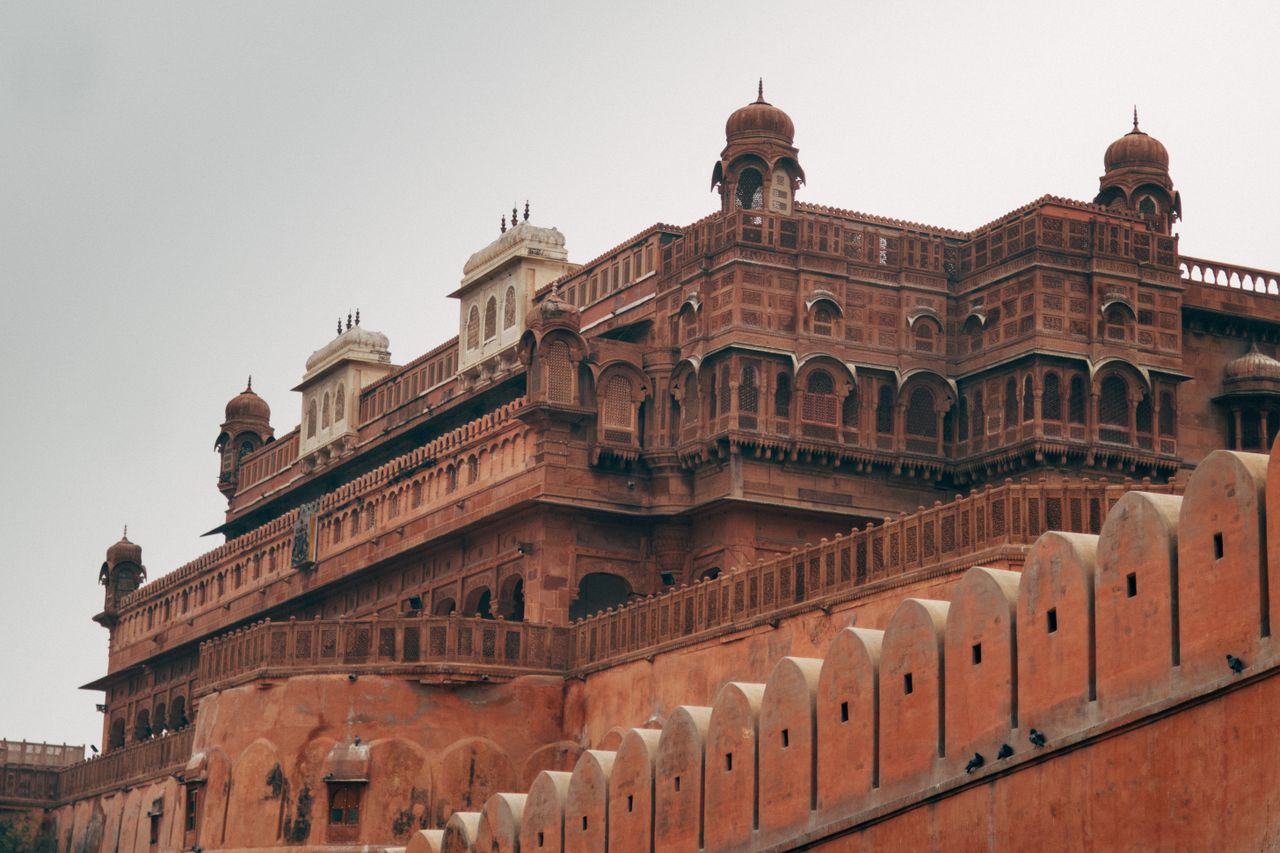
Even its most famous landmark, Junagarh Fort, feels distinctive. Unlike many of Rajasthan’s great forts, which rise dramatically on hilltops, Junagarh stands on the flat desert plain. Its impressive palaces, courtyards, balconies, and richly decorated interiors reflect the wealth and ambition of the Bikaner rulers without separating the fort from the city around it. Bikaner is therefore worth adding to your Rajasthan route not just for another fort or another historic city, but for the atmosphere. It offers a glimpse of desert Rajasthan at a slower, more authentic rhythm—where history is still woven into ordinary streets, local markets, food, architecture, and daily life.
If Jaipur introduces you to royal Rajasthan and Udaipur showcases its romantic side, Bikaner gives you a taste of the desert kingdom that grew along the ancient caravan routes of the Thar.
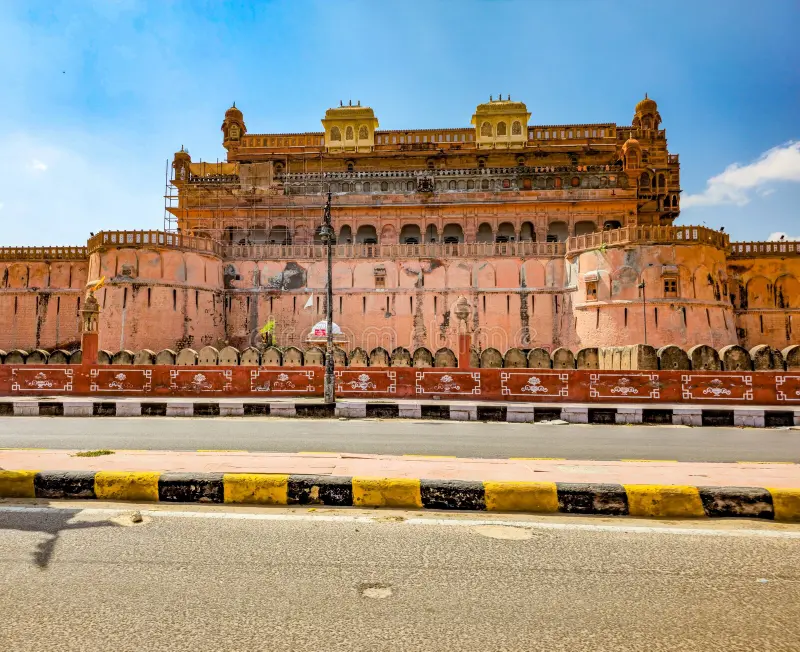
Junagarh Fort
Junagarh Fort is the most important stop in Bikaner and should anchor your itinerary. Built between 1589 and 1594 by Raja Rai Singh, a general in Akbar’s court, the fort is unique among Rajasthan’s great forts because it stands on flat desert plains rather than a hilltop. But its location did not make it vulnerable. The fort faced repeated attacks over the centuries but was never successfully conquered. Inside, its grand palaces, courtyards, and richly decorated interiors showcase the wealth and artistic heritage of the Bikaner royal family.
Inside Junagarh Fort, a remarkable collection of palaces and courtyards offers a glimpse into the grandeur of Bikaner’s royal court.
- Karan Mahal – Built to commemorate a military victory, Karan Mahal is one of the fort’s most elegant halls. Its beautifully carved balconies, marble details, and open courtyard reflect the grandeur of the Bikaner royal court.
- Anup Mahal – Often considered the most spectacular interior in Junagarh, Anup Mahal is famous for its lavish gold-leaf decoration. The richly painted walls and intricately carved wooden ceilings create a sense of extraordinary royal luxury.
- Phool Mahal – One of the oldest parts of the fort, Phool Mahal is more delicate in character. Its traditional paintings, decorative patterns, and intricate artwork offer a glimpse into the artistic tastes of the early Bikaner rulers.
- Badal Mahal – This unusual palace takes its name from the Hindi word for clouds. Its blue-painted interiors were designed to represent monsoon clouds, creating a striking visual contrast with Bikaner’s dry desert surroundings.
- Chandra Mahal & Ganga Mahal – These lavish royal chambers showcase the lifestyle of Bikaner’s rulers and later became part of the fort’s museum spaces. Visitors can see historic weapons, manuscripts, royal costumes, and other objects connected to the royal family.
The impressive Suraj Pol and Karan Pol gateways also reveal how carefully the fort was designed for defense.
Allow 2–3 hours to explore Junagarh properly. There is a lot of detail to take in, and rushing through the complex can mean missing some of its finest architecture and stories. The fort is open daily, but entry fees can change, so check the current rates at the ticket counter before visiting.
Lalgarh Palace and the Sadul Museum
Built in the early 20th century by Maharaja Ganga Singh in memory of his father, Maharaja Lal Singh, Lalgarh Palace represents a more modern chapter of Bikaner’s royal history. The palace is particularly striking for its blend of Rajput, Mughal, and European architectural styles, all brought together through beautifully carved red sandstone.
The palace also houses the Sadul Museum, where you can see old photographs, royal belongings, and other objects connected to the Bikaner royal family. One of the more unusual exhibits is a preserved royal railway carriage, reflecting how the rulers embraced modern technology and travel.
Allow around 1–1.5 hours for a visit. If Junagarh Fort takes you into Bikaner’s earlier royal era, Lalgarh Palace gives you a glimpse of how the city’s royal world evolved in the decades leading up to Independence.
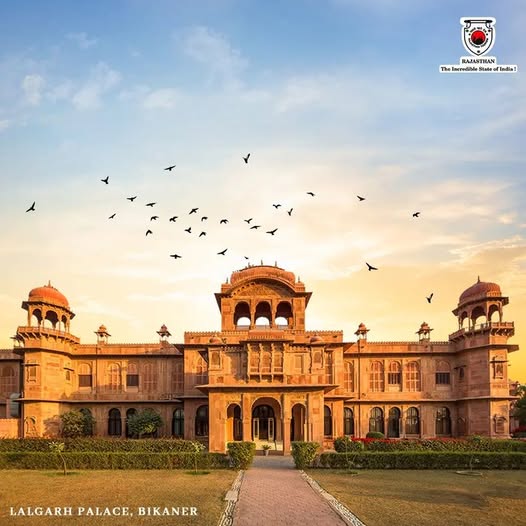
Laxmi Niwas Palace
Built between 1898 and 1902 for Maharaja Ganga Singh, Laxmi Niwas Palace was designed by British architect Samuel Swinton Jacob in the Indo-Saracenic style. The building combines Indian decorative details with European architectural elements, creating an elegant and distinctive palace in red sandstone. Today, it operates as a heritage hotel, so access to the interiors depends on hotel policy. Even from outside, its carved sandstone façade, broad arches, and decorative balconies make it worth a brief stop. Allow around 30–45 minutes if you are only viewing the exterior.
Devi Kund: The Royal Cenotaphs
Located about 8 km from Bikaner city centre, Devi Kund was traditionally the cremation ground of Bikaner’s royal family. Today, the site is known for its beautiful collection of chhatris, or royal cenotaphs, built to commemorate members of the ruling dynasty. The cenotaph of Maharaja Surat Singh is particularly notable for its detailed craftsmanship, combining sandstone, marble, and intricate carvings. Quieter than Bikaner’s main attractions, Devi Kund offers a peaceful setting to appreciate the architecture and take photographs without the crowds.
Allow around 45 minutes to an hour for a relaxed visit.
Shiv Bari and Shri Laxminath Temple
Bikaner’s religious sites add another dimension to the city, showing that its history is about more than forts and palaces.
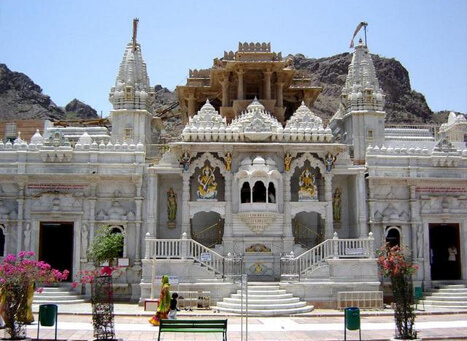
Shiv Bari Temple – Located about 6 km from the city centre, this 19th-century temple was built by Maharaja Doongar Singh in memory of his father. Surrounded by a high defensive wall, it has the appearance of a small fortified shrine. Inside, you’ll find a distinctive four-faced black marble image of Lord Shiva along with a bronze statue of Nandi.
Shri Laxminath Temple – This temple holds a special place in Bikaner’s history. The royal family traditionally regarded Lord Laxminath as the true ruler of the kingdom, while the Maharaja was considered his administrator. Built with marble and red sandstone, the temple features detailed religious artwork and a peaceful atmosphere that makes it worth visiting.
Allow around 30–45 minutes at each temple for a relaxed visit.
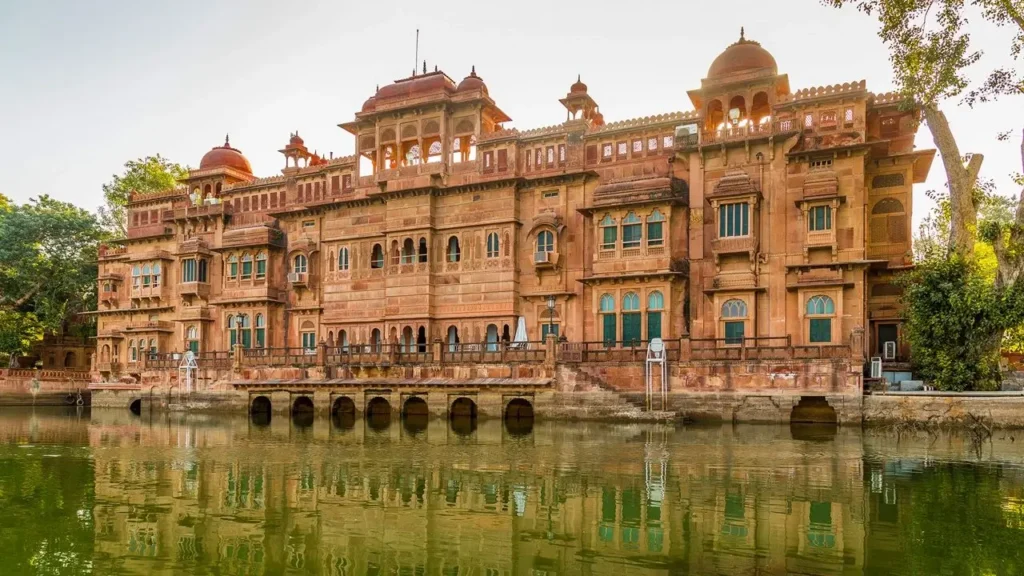
Gajner Palace, Lake and Wildlife Sanctuary
About 30 km from Bikaner, Gajner offers a peaceful escape from the city’s forts and temples. Maharaja Gaj Singh began the palace as a royal hunting retreat beside Gajner Lake, and Maharaja Ganga Singh later completed it. Today, the palace operates as a heritage hotel, with its elegant wings—Dungar Niwas, Gulab Niwas, and Champa Niwas—set beautifully beside the lake.
The nearby Gajner Wildlife Sanctuary adds another reason to visit. This desert sanctuary is home to nilgai, chinkara, blackbuck, and migratory birds in the right season. A visit to the palace and sanctuary works best as one combined outing. Allow around 2–3 hours, especially if you want to enjoy the lake around sunset.
Kodamdesar Temple and Lake
Located about 24 km from Bikaner, Kodamdesar has a connection to the city’s origin story. According to tradition, Rao Bika considered establishing his kingdom here before choosing the location where Bikaner stands today. The temple is dedicated to Kodamdesar Bhairav Ji, while the nearby lake creates a quiet and peaceful setting. Far less crowded than Bikaner’s major attractions, it is a good choice if you want to experience a more tranquil side of the region. Allow about 1 hour.
Ganga Government Museum
The Ganga Government Museum is worth adding if you enjoy understanding the history behind the monuments you visit. Its collections include archaeological finds, art, crafts, and historical objects from the Bikaner region. It provides useful context for the forts, palaces, and temples you have already explored, making it more rewarding for travelers interested in history and culture than those simply checking off sightseeing spots. Allow around 1–1.5 hours for a comfortable visit.
Best Time to Visit Bikaner
The best time to visit Bikaner is from October to March, when the weather is cooler and more comfortable for exploring forts, temples, markets, and outdoor attractions. Summer can be extremely hot, with temperatures often rising above 40°C. If you visit between April and June, plan your sightseeing around the heat: start outdoor visits early in the morning and save places such as Devi Kund and Gajner Lake for the late afternoon or around sunset.
For the most comfortable experience, winter is the clear choice, especially if you plan to spend several hours exploring Bikaner on foot.
How to Plan Your Bikaner Sightseeing
One Full Day
If you have just one day in Bikaner, focus on the city’s most important historical and cultural highlights. Start with Junagarh Fort, the main attraction and the best place to understand Bikaner’s royal history. Continue to Lalgarh Palace and Shri Laxminath Temple, then visit Devi Kund for its peaceful royal cenotaphs. Finish the day with Karni Mata Temple in Deshnoke, one of the region’s most unusual and memorable religious sites. This route gives you a good mix of forts, palaces, temples, royal history, and local culture without trying to squeeze in every attraction.
Two Days
With two days, you can explore Bikaner at a more relaxed pace. Use the first day for the main city attractions, including Junagarh Fort, Lalgarh Palace, Shri Laxminath Temple, and Devi Kund. On the second day, explore the attractions outside the city, combining Gajner Palace and Wildlife Sanctuary with Shiv Bari Temple or Kodamdesar Temple. You can also include Karni Mata Temple in Deshnoke depending on your route. Two days are ideal if you want to experience Bikaner beyond its headline attractions and have enough time to appreciate the desert landscape, royal heritage, temples, and quieter corners of the region.
Practical tips before you go
- Wear comfortable shoes — Junagarh’s palace circuit involves a fair amount of walking across courtyards and stairs.
- Carry water and a hat if visiting between April and June; shade is limited around Devi Kund and Gajner Lake.
- At Karni Mata Temple, be prepared to walk barefoot through areas where rats move freely; this isn’t for everyone, but it’s a genuinely unique cultural experience.
- Confirm current entry fees at each site, since museum and camera charges can change and vary between Indian and foreign visitors.
- Bikaner connects easily by road to Jodhpur, Jaisalmer, and Jaipur, so it works well as a stop on a longer Rajasthan circuit rather than a standalone trip for most travellers.
Planning your Rajasthan trip around Bikaner
Bikaner works best as part of a wider desert circuit rather than a one-off visit. If you’re routing through Jaisalmer or Jodhpur as well, our Jaisalmer desert camp guide and Jodhpur Blue City sightseeing guide cover the other two corners of this stretch. For a broader sense of when to travel across the state, see our best time to visit Rajasthan guide. And if you’d rather have the whole route planned for you, browse our Rajasthan tour itineraries for multi-city options that can include Bikaner.

Rajasthan Family Package For 6 Nights
Embark on an unforgettable 7-day Rajasthan tour package that takes you through the royal cities of Jaipur, Jaisalmer, and Udaipur.…
6 Nights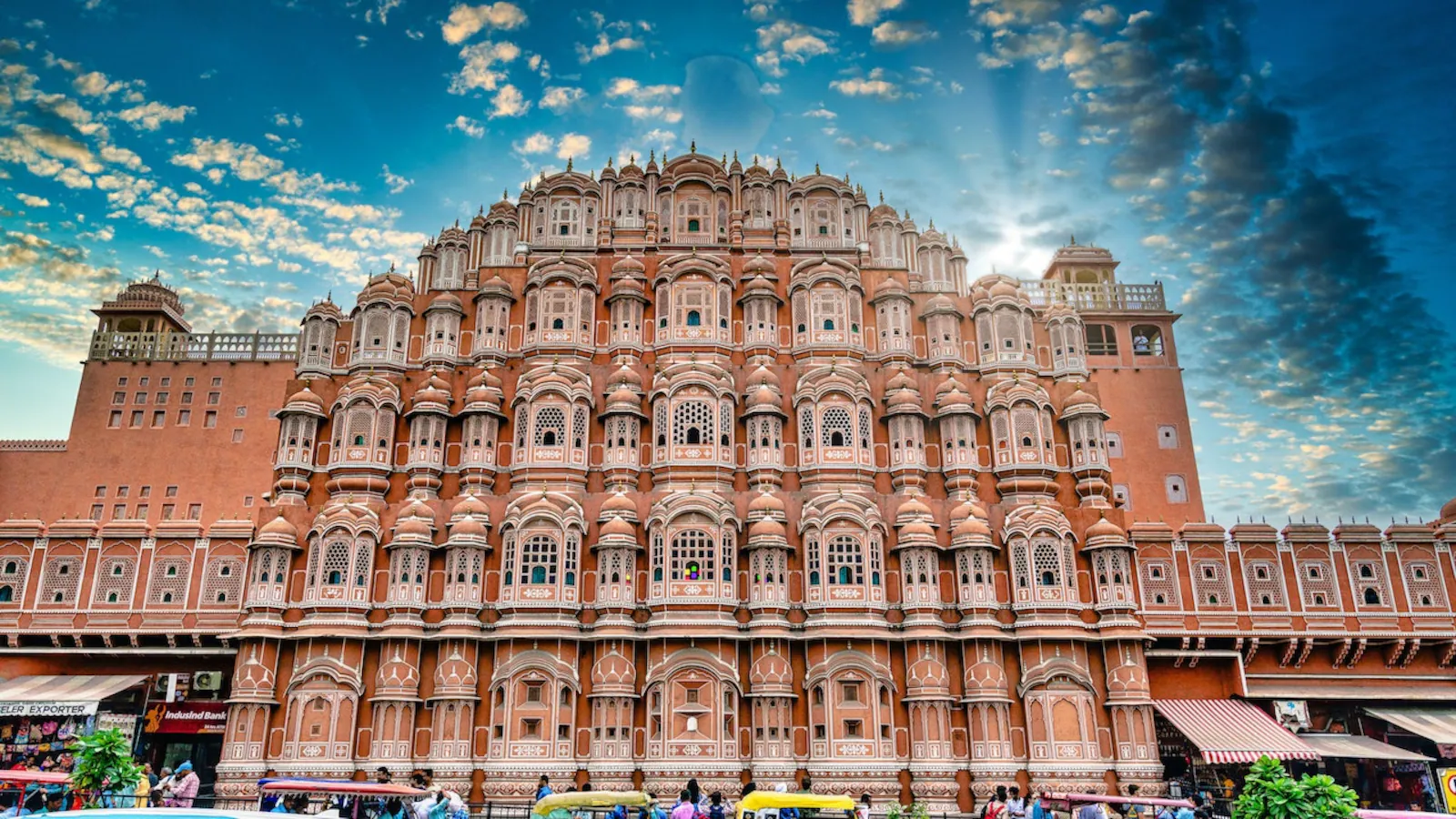
Rajasthan Package For 5 Nights With Jaipur Jodhpur & Udaipur
Embark on a captivating 6-day Rajasthan tour package and explore the vibrant colors of this majestic land. From the pink…
5 Nights
Jaisalmer Couple Package With Camp Stay & Camel Safari
Experience the magic of Jaisalmer with this delightful 3-day, 2-night tour package. Discover the golden sands of the Thar Desert,…
2 Nights
Rajasthan Safari Tour Package for Ranthambore and Jaipur
Embark on an exciting 4-day tour package to Rajasthan! This Jaipur Ranthambore holiday takes you to the enchanting city of…
3 Nights
Rajasthan 4 Nights Plan with Jaipur & Udaipur
Experience the charm of Rajasthan with this exciting 5-day tour package. Enjoy the majestic beauty of Jaipur and the romantic…
4 Nights
Rajasthan Tours for 8 Nights Jp2RnUd2Js2Jd
Join this exciting Rajasthan tour package for an unforgettable 9-day vacation! Explore the golden sands of Jaisalmer, the blue streets…
8 Nights
7 Nights Rajasthan Package With Jaipur Jodhpur Udaipur Jaisalmer
Embark on an unforgettable 8-day Rajasthan tour package and immerse yourself in the royal culture of Jaipur, Udaipur, Jaisalmer, and…
7 Nights
Rajasthan Tour Package - J2BJs2JdUd2PJ
Embark on an unforgettable 11-day Rajasthan tour package that takes you through the magnificent landscapes and rich culture of Rajasthan.…
10 Nights
Rajasthan Tour Package 9 Nights - J2RUd2Js2JdJp
Embark on a breathtaking 10-day Rajasthan tour package that takes you through the heart of Royal India. Discover the golden…
9 Nights
Golden Triangle - 5N - D2AJ2
Join us on an exciting 6-day tour package through the magical Golden Triangle. Discover the vibrant streets of Delhi, marvel…
5 Nights
Golden Triangle 6N - J2AD3
Embark on an unforgettable Golden Triangle tour package that takes you through the vibrant cities of Delhi, Jaipur, and Agra…
6 NightsGolden Triangle Tour Package With Delhi Agra Only
Join this amazing Golden Triangle Tour Package for 3 days and 2 nights of unforgettable experiences in Delhi and Agra!…
2 NightsDiscover Incredible Destinations
Handpicked locations offering unforgettable experiences for every type of traveler
Andaman
Paradise of pristine beaches

Rajasthan
Land of kings and culture

Kashmir
Heaven on Earth

Ladakh
Land of high passes

Kerala
God's own country

Meghalaya
Abode of the clouds

Dubai
City of gold and luxury
Thailand
Land of smiles
Maldives
Tropical paradise islands
Singapore
Garden city of Asia

Bali
Island of the gods

Vietnam
Ancient charm meets modern