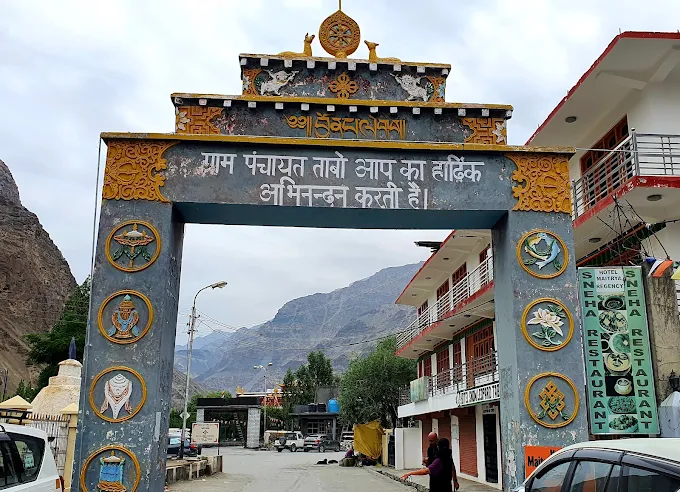
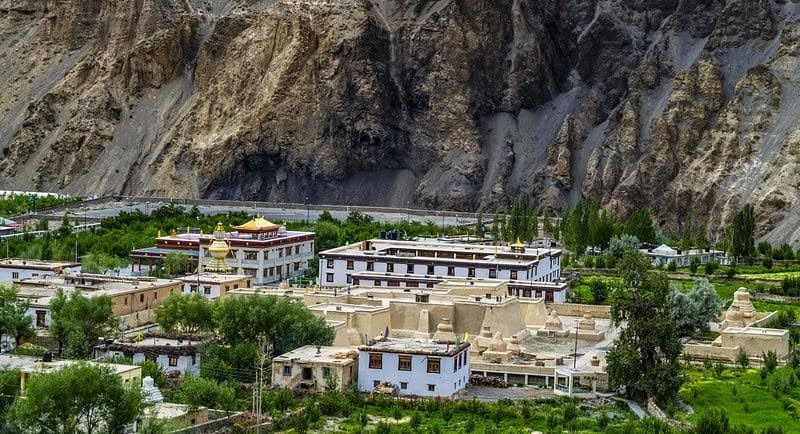
Tabo is a small, peaceful village tucked away in the Spiti Valley of Himachal Pradesh, offering a quieter experience than the busy hub of Kaza. Known for its ancient Buddhist heritage and dramatic cold-desert landscapes, Tabo is home to the famous 996 CE Tabo Monastery, ancient meditation caves, and traditional mud-brick village lanes. If you’re looking for the best places to visit in Tabo, this guide covers the major attractions, along with useful information on how to reach Tabo and the best time to visit.
Why Tabo Deserves a Stop on Your Spiti Trip
Many travellers treat Tabo as a quick stop between Kaza and Kinnaur, but the village deserves more time. Unlike the busier parts of Spiti, Tabo has a peaceful and unhurried atmosphere. Its dry, rugged mountains create a striking cold-desert landscape, while the traditional village and ancient Buddhist sites add a strong cultural character to the destination.
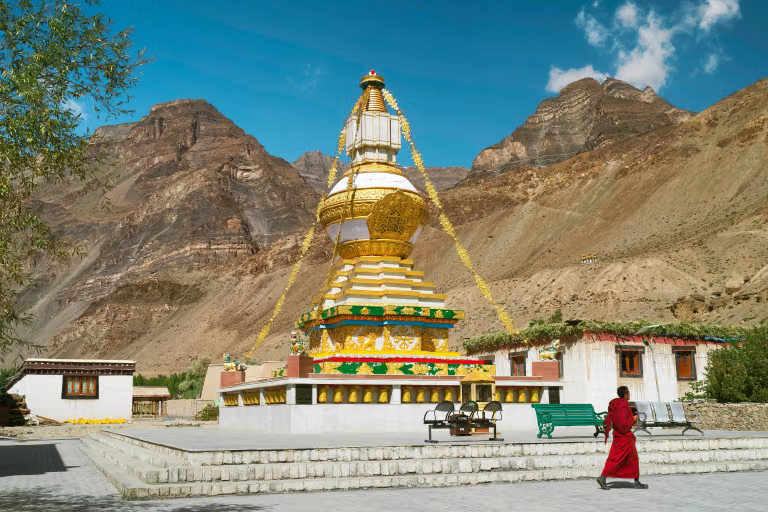
The biggest reason to visit is Tabo Monastery, founded in 996 CE. It is one of the oldest continuously functioning Buddhist monasteries in the Himalayan region and is famous for its ancient murals, sculptures and richly decorated interiors. Because of its exceptional collection of Buddhist art, Tabo is often called the “Ajanta of the Himalayas.” Tabo is also important to Tibetan Buddhism. The Dalai Lama has expressed a deep connection with Tabo Monastery and has spoken about its spiritual importance. This gives the village significance beyond its scenic beauty and makes it an important cultural stop for anyone exploring Spiti Valley.
With its ancient monastery, meditation caves, traditional village lanes and dramatic mountains, Tabo offers a quieter side of Spiti that is easy to miss when travelling through the valley too quickly.
Tabo Monastery: The Heart of the Village
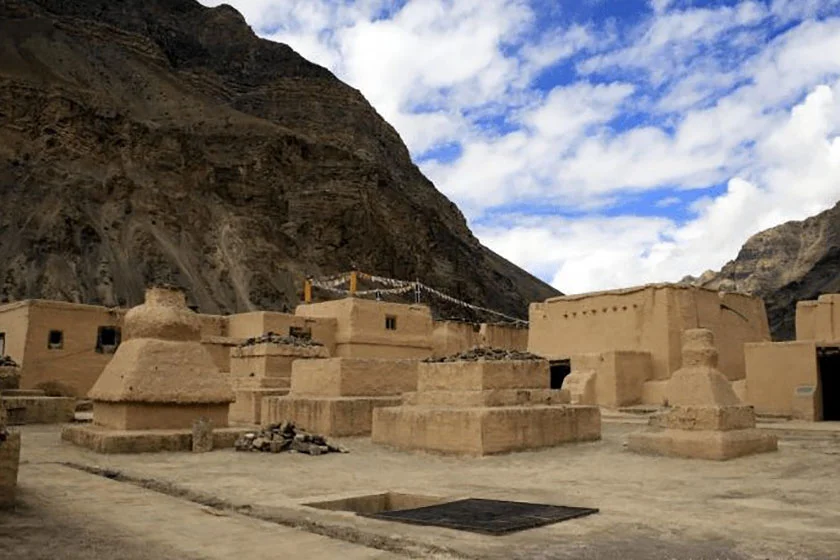
Tabo Monastery is the cultural and spiritual centre of Tabo and the main attraction for most visitors. Founded in 996 CE, it is one of the oldest continuously functioning Buddhist monasteries in the Himalayan region. Its foundation is traditionally associated with Yeshe-Ö, a king of the ancient Guge Kingdom, and Rinchen Zangpo, the renowned Tibetan translator who played an important role in spreading Buddhism across the western Himalayas. From the outside, the monastery may appear simple, with its mud-and-stone walls and low, traditional structures. Unlike the dramatic cliffside monasteries of Spiti, Tabo Monastery blends quietly into the surrounding village. However, stepping inside reveals a completely different world.
The monastery’s temples are known for their remarkable collection of ancient Buddhist art, including:
- Centuries-old murals depicting Buddhist deities and bodhisattvas
- Intricate mandalas painted across the temple walls
- Traditional clay sculptures dating back many centuries
- Ancient manuscripts and religious scriptures
The interiors are dimly lit and have a peaceful, almost timeless atmosphere. Photography may be restricted inside the temples, so it is best to follow the monastery’s rules and take time to appreciate the artwork directly. Visitors should also avoid touching the murals or sculptures, as these delicate artworks have survived for centuries and require careful preservation.
A visit to Tabo Monastery is therefore more than ordinary sightseeing—it is an opportunity to experience the history, art and spiritual heritage of Spiti Valley in one remarkable place.
Tabo Caves: A Quiet Place of Meditation
It is located on the rocky hillside above the village, the Tabo Caves offer a glimpse into the region’s long tradition of Buddhist meditation. These natural caves were used by monks as secluded retreats for solitary meditation and spiritual practice, providing a quiet space away from the monastery and village. Reaching the caves involves a short walk over rocky and uneven terrain. Since Tabo is situated at a high altitude of around 3,050 metres, the climb can feel more tiring than expected. Take your time, stay hydrated and wear comfortable shoes.
The effort is rewarded with beautiful views of Tabo village, its green agricultural fields and the barren mountains of Spiti Valley. Early morning and late afternoon are ideal for enjoying the scenery and photography, when the changing sunlight adds warmth to the otherwise rugged landscape.
Walking Through Tabo Village
A walk through Tabo village is one of the simplest ways to experience the local lifestyle. Spend an hour or two exploring its quiet lanes and traditional homes, many of which are built with mud and stone to withstand the cold, dry climate.
As you walk around, you can see:
- Small agricultural fields surrounded by barren mountains
- Narrow village lanes decorated with prayer flags
- Buddhist prayer wheels
- Small shrines and traditional homes
The village also highlights the unique cold-desert character of Spiti Valley. Unlike the lush, forested landscapes found in many parts of Himachal Pradesh, Tabo is surrounded by dry, rugged mountains, with green farmland appearing only where water from mountain streams makes cultivation possible.
Best time to visit Tabo
Spiti’s roads are only open for part of the year. The India Meteorological Department tracks snowfall and road conditions across Himachal’s high-altitude passes, which stay snowbound well into spring — Tabo is no exception.
- May to June: Roads are open, days are pleasant, nights are still cold.
- July to September: The best window overall. Clear skies, stable roads, and the monastery gardens and fields are at their greenest.
- October: Fewer tourists, colder nights, but still accessible.
- November to April: Both main routes into Spiti close due to heavy snow. Avoid planning a trip in this window.
If you want a fuller seasonal breakdown for the whole valley, our Spiti Valley travel guide covers month-by-month conditions in more detail.
How to Reach Tabo
The road trip to Tabo is an important part of the Spiti Valley experience. Because Tabo is located in a remote, high-altitude region, travelling by road is the most practical way to reach the village. There are two main approaches: via Shimla–Kinnaur and via Manali–Kaza. The scenery, road conditions and overall experience are quite different on each route.
Via Shimla and Kinnaur
The Shimla–Kinnaur route is generally considered the longer but more gradual approach to Spiti. From Shimla, the journey continues through the beautiful landscapes of Narkanda, Rampur, Reckong Peo and Kinnaur before entering the Spiti region and eventually reaching Tabo. This route is ideal for travellers who want to experience a longer Himalayan road journey. The landscape changes gradually as you move from the greener hills around Shimla and Kinnaur towards the dry, rugged terrain of Spiti. The route can be divided into multiple travel days rather than attempting the entire journey at once. Travellers commonly use places such as Kalpa or Nako as overnight stops depending on their itinerary and road conditions.
One of the biggest advantages of approaching Spiti from this side is that you gradually adjust to the increasing altitude. However, the roads can be narrow and winding in sections, and travel times can vary considerably depending on weather and road conditions.
Via Manali and Kaza
The second major approach is through Manali and Kaza. This route is particularly popular with travellers looking for a dramatic high-altitude road-trip experience. From Manali, the road climbs towards Rohtang Pass and Kunzum Pass before descending into the Spiti Valley. Once you reach Kaza, Tabo is approximately 47 km away by road, making it a relatively easy continuation of the Spiti circuit. The scenery changes dramatically along this route. Green mountain landscapes gradually give way to rocky slopes, high-altitude passes and the distinctive barren terrain of Spiti.
The Kaza-to-Tabo stretch is especially scenic, passing through rugged mountains and open valley landscapes. The journey is not very long in terms of distance, but road conditions and stops for photography can make the drive take longer than expected.
Which Road Route Should You Choose?
If you want a longer cultural and scenic Himalayan road trip with gradual altitude gain, the Shimla–Kinnaur side is an excellent choice.
If you are already travelling through Manali and Kaza, reaching Tabo from Kaza is much more straightforward and naturally fits into a Spiti Valley circuit.
Whichever route you choose, remember that mountain road conditions can change quickly because of rain, landslides, snowfall and other weather-related factors. Keep your itinerary flexible, avoid rushing, and check the latest road conditions before beginning the journey.
Where to stay in Tabo
Tabo is a small village, so options are limited compared to Kaza, but they cover most budgets.
- Budget: The Tabo Monastery Guest House offers dorm beds and basic private rooms. Expect shared bathrooms and no guaranteed hot water.
- Mid-range: A handful of small guesthouses and homestays offer private rooms with meals included, which is convenient given how few restaurants the village has.
- Comfort: A few retreat-style properties offer better furnishings and full board, useful if you want a proper rest after a long drive.
Book ahead in peak season (July–September), since Tabo has far fewer rooms than Kaza.
A one-day plan for Tabo
If you only have one day here, this order works well:
- Morning: Start at Tabo Monastery. Give it at least 90 minutes to see the temples properly.
- Late morning: Walk through the village, past the fields and prayer wheels.
- Afternoon: Climb up to the Tabo Caves if you’re acclimatised to the altitude.
- Evening: Head back toward the monastery area and watch the light change over the mountains.
For travellers linking Tabo with the rest of the valley, our guides on places to visit in Kaza and the Kaza to Komic day trip are good next stops on the itinerary.
FAQs about visiting Tabo
Is Tabo worth visiting if I’ve already seen Key Monastery? Yes. Key Monastery is dramatic and cliff-perched; Tabo is older, quieter, and richer in mural art. They offer very different experiences.
Can I stay overnight at Tabo Monastery? Yes, the monastery guest house accepts overnight guests, and it’s one of the more memorable places to stay in the valley.
How many days should I plan for Tabo? One full day covers the main sights comfortably. Two days lets you add a slower village walk and rest for altitude.
Is Tabo suitable for a family trip? Yes, the walking is gentle and the village is calm, though families should still plan for altitude and limited medical facilities nearby.
If you’d rather have the whole valley planned for you, from Kaza to Tabo to Chandratal, you can browse our Spiti Valley itineraries or check general options on our Himachal tour packages page.

Spiti Valley Tour Package for 5 nights
Embark on an unforgettable 6-day Spiti Valley tour package through the stunning landscapes of Himachal Pradesh. This amazing vacation includes…
5 Nights
Spiti Valley
Embark on an unforgettable 11-day vacation in the stunning Spiti Valley. Explore the breathtaking landscapes of Himachal Pradesh as you…
10 Nights
Spiti Valley
Embark on an unforgettable 9-day tour package to the stunning Spiti Valley. Explore the breathtaking landscapes of Kalpa, Sarahan, Tabo,…
8 NightsSpiti Tour Package For 8 Nights
Embark on an unforgettable 10-day Spiti tour package that takes you to the stunning landscapes of Himachal Pradesh. Experience the…
9 NightsSpiti Tour Package for 7 Nights From Delhi
Embark on an unforgettable 8-day Spiti tour package starting from Delhi! Discover the stunning landscapes of Himachal Pradesh, explore charming…
7 Nights
Spiti Valley Tour Package For 12 Nights Spiti Full Circuit
Embark on an unforgettable 12-day Spiti Valley tour package that unveils the breathtaking beauty of Himachal Pradesh. Experience the charm…
11 Nights
Spiti Valley Family Tour Package For 6 Nights From Delhi
Join us on a thrilling Spiti Valley family tour package for 7 days and 6 nights! Experience the stunning landscapes…
6 NightsSpiti Valley Family Tour With Moon Lake
Join us on an unforgettable 9-day holiday to Spiti Valley! This amazing tour package takes you through the breathtaking landscapes…
8 NightsChandartaal Baralacha Pass Trip 5 Days
starts Manali, 1N at Losar, 1N at Chandartaal Lake, 1N at Jispa, 1N at Manali , end manali
4 Nights
Rajasthan Family Package For 6 Nights
Embark on an unforgettable 7-day Rajasthan tour package that takes you through the royal cities of Jaipur, Jaisalmer, and Udaipur.…
6 Nights
Kashmir - Summer Package 4 Nights
Experience the breathtaking beauty of Kashmir and Jammu with our exciting 5-day summer tour package. Wander through stunning valleys, enjoy…
4 Nights
Andaman Family Tour Package for 5 Nights
Embark on an unforgettable Andaman tour package with this thrilling 6-day holiday in the breathtaking Andaman and Nicobar Islands. Enjoy…
5 NightsDiscover Incredible Destinations
Handpicked locations offering unforgettable experiences for every type of traveler
Andaman
Paradise of pristine beaches

Rajasthan
Land of kings and culture

Kashmir
Heaven on Earth

Ladakh
Land of high passes

Kerala
God's own country

Meghalaya
Abode of the clouds

Dubai
City of gold and luxury

Thailand
Land of smiles

Maldives
Tropical paradise islands

Singapore
Garden city of Asia

Bali
Island of the gods

Vietnam
Ancient charm meets modern